Uniform Guidelines:
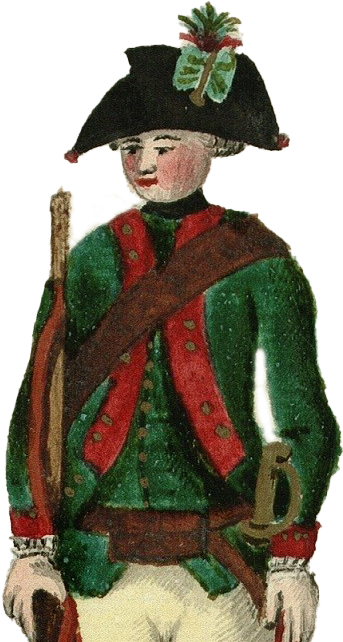
Our uniform standards are based on primary source illustrations and existing examples of uniforms and accouterments. We intend to depict both Hessian and Anspach Jäger, as they were both under the command of Capt. Röder in the 2nd Anspach-Bayreuth Jäger Company. Additionally, we aim to depict a veteran uniformed military unit on campaign, with slight variations in color hues and uniform wear to reflect differences in replacement issues, service length, and the soldier’s nationality.
DISCLAIMER: All uniform pieces are 100% linen or wool, and all items are hand-sewn. Sources are not all-inclusive; alternative sources must be approved to confirm that the quality and specifications meet our unit’s standards.
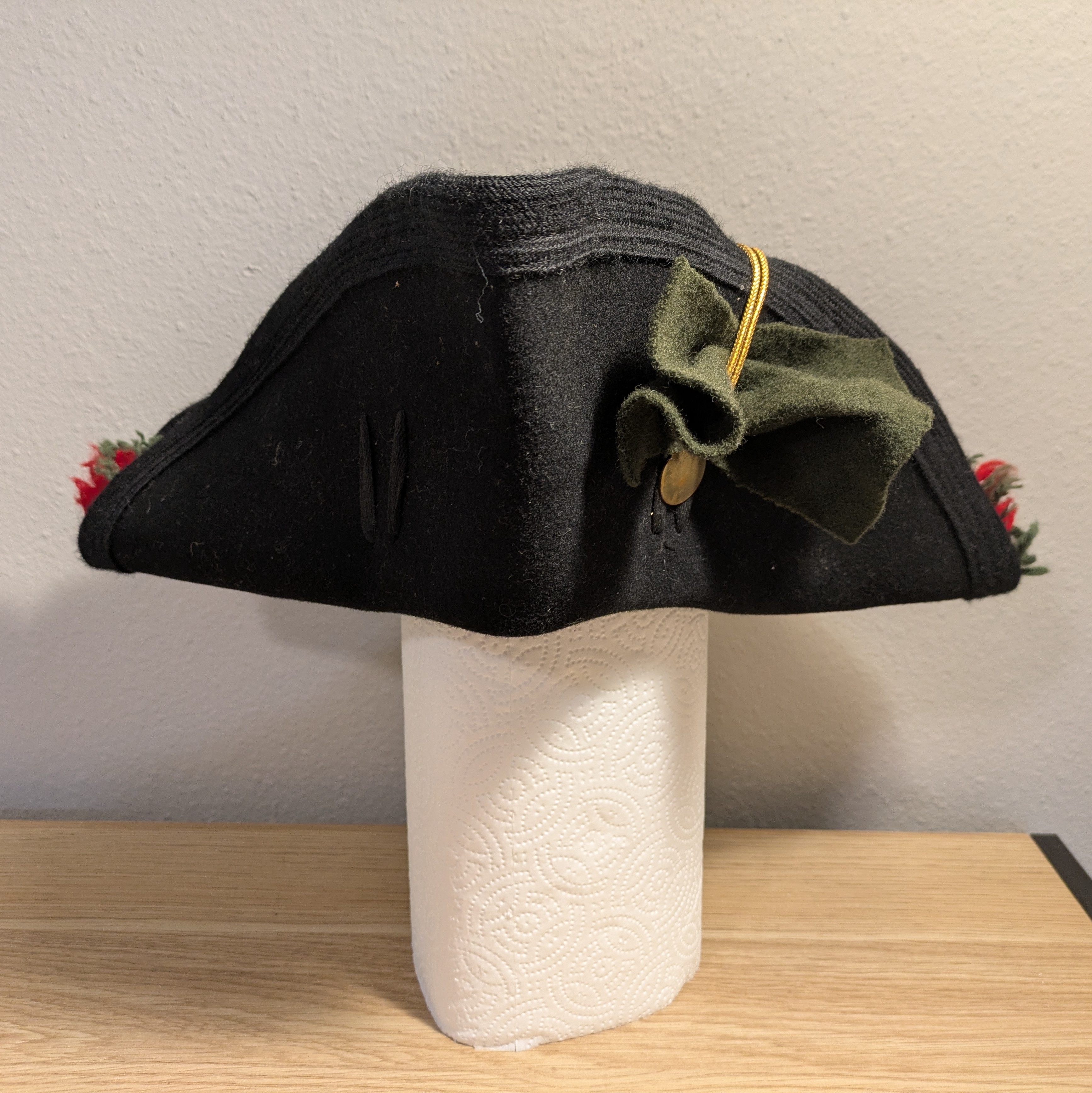
Black Military Cocked Hat (Hut)
A black felt, or beaver, continental European-style cocked hat with a pinched front. A Green cockade on the left side of the pinched front with two puschels on either side of the hat. The puschels are green with a red center bound by a green cord.
Source:
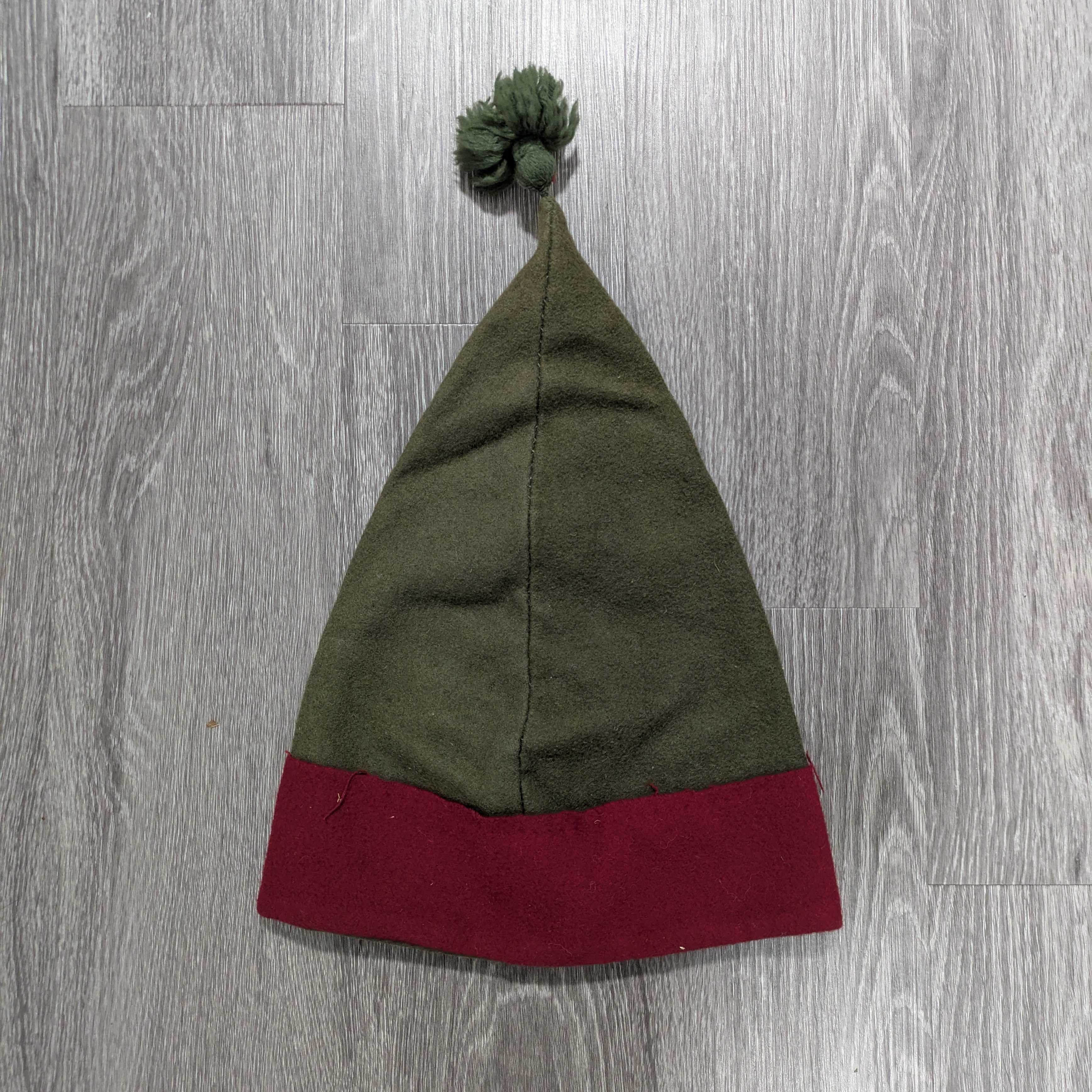
Fatigue/Foraging Cap (Schlaufmutze)
A Green wool cap with crimson or dark red trim and a green-and-red centered tassel. (same as the puschel)
Sources:
The Fatigue/Foraging Cap is made by the unit with extra fabric obtained after sewing the Regimental Coat.
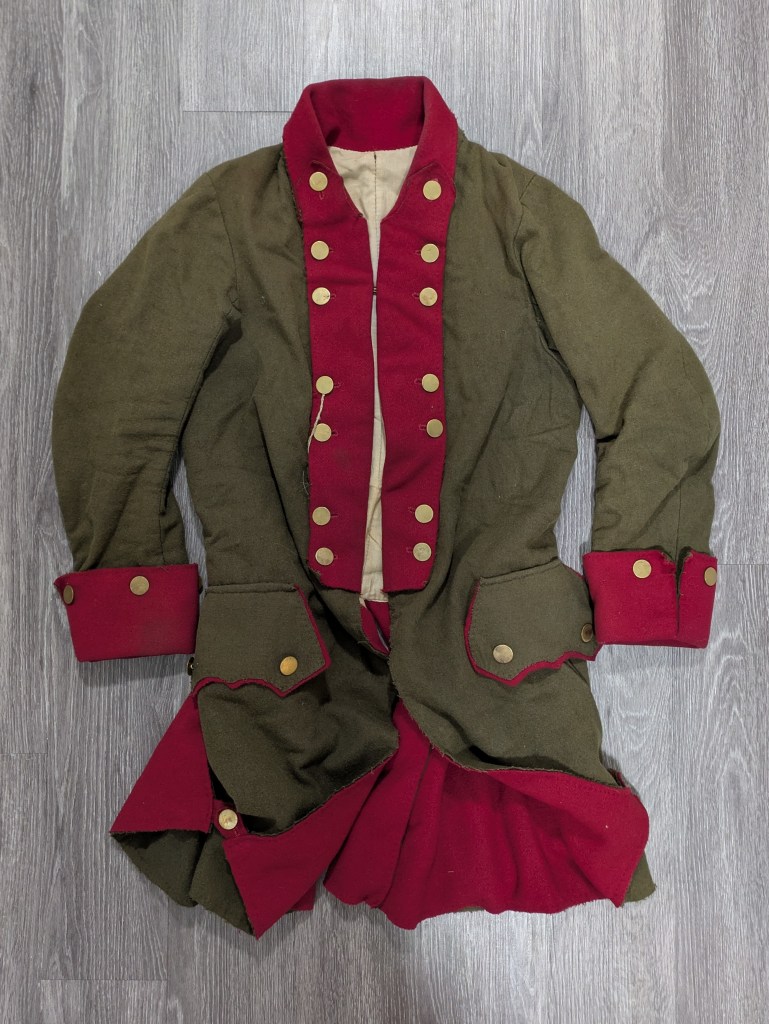
Regimental Coat (Rock)
A green wool (Forrest/dull Hunter Green) Regimental Coat with red facings, collar, and cuffs. Coat skirts are fuller and in line with the 1750-1760s style. The buttons are Flat Brass in 7/8-inch and 5/8-inch sizes.
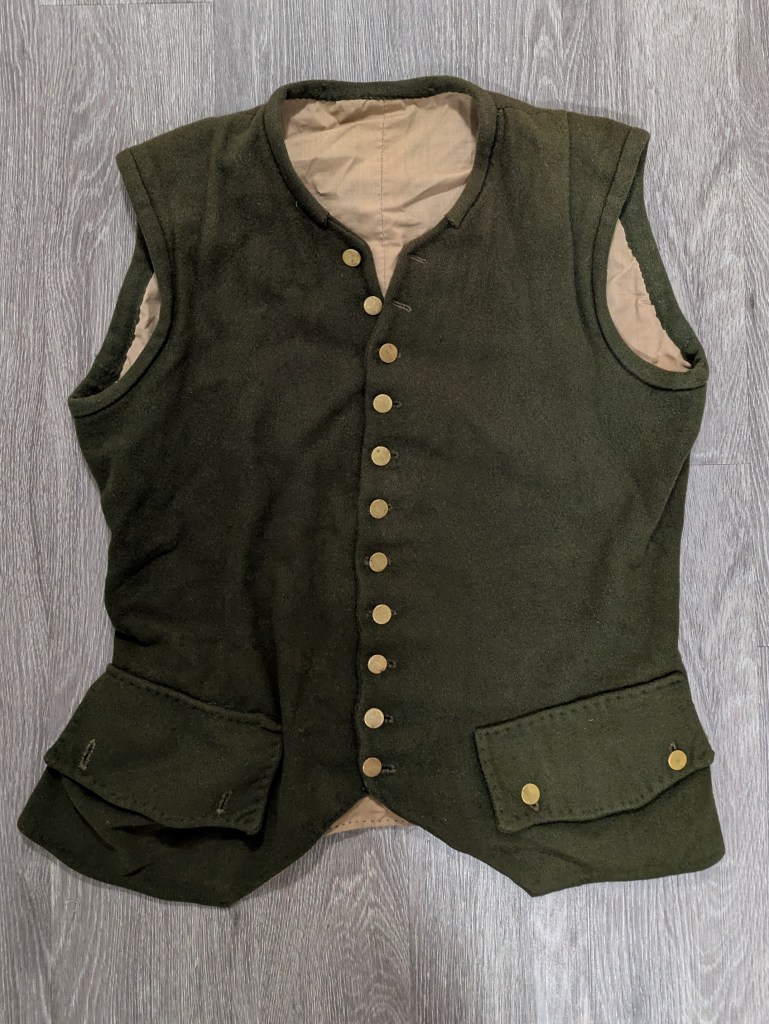
Waistcoat (Kamisol)
A green wool (Forrest/dull Hunter Green) Waistcoat in Germanic styling, lined in linen. The buttons are flat brass.
Sources:
Wool Broadcloth:
- Kochan & Phillips: X-GR016 (Green Shade – For the coat and waistcoat) – 8 yards minimum
- Kochan & Phillips: Madder Red – For the coat trim, cuffs, etc. – 2 yards minimum
- Najecki Madder Red is also acceptable.
Lining:
- Kochan & Phillips: Madder Red Bay – 2.5 yards minimum
- Najecki Madder Red Bay is also acceptable.
- Unbleached Linen (For the sleeves of the coat) – 2.5 yards minimum
The unit sews the regimental coat and waistcoat with a standardized pattern.
Linen Shirt (Hemd)
Any white linen 18th-century shirt. Preference to a 1″-2″ short collar with thread, wood, or bone buttons.
Sources:
- 18th Century Men’s Linen Shirt | English Style
- Completely Handsewn 18th/Early 19th Century Linen Shirt
False Front (Vorhemd)
A pleated false front with a connected wrap-around white neck stock.
Sources:
The False Front is made by the unit. It is an easy, beginner sewing project for those wanting to learn.
Neck Stock (Halsbinde)
A black horsehair or linen neck stock. Brass clasps or linen ties are acceptable.
Sources:


Breeches (Hose)
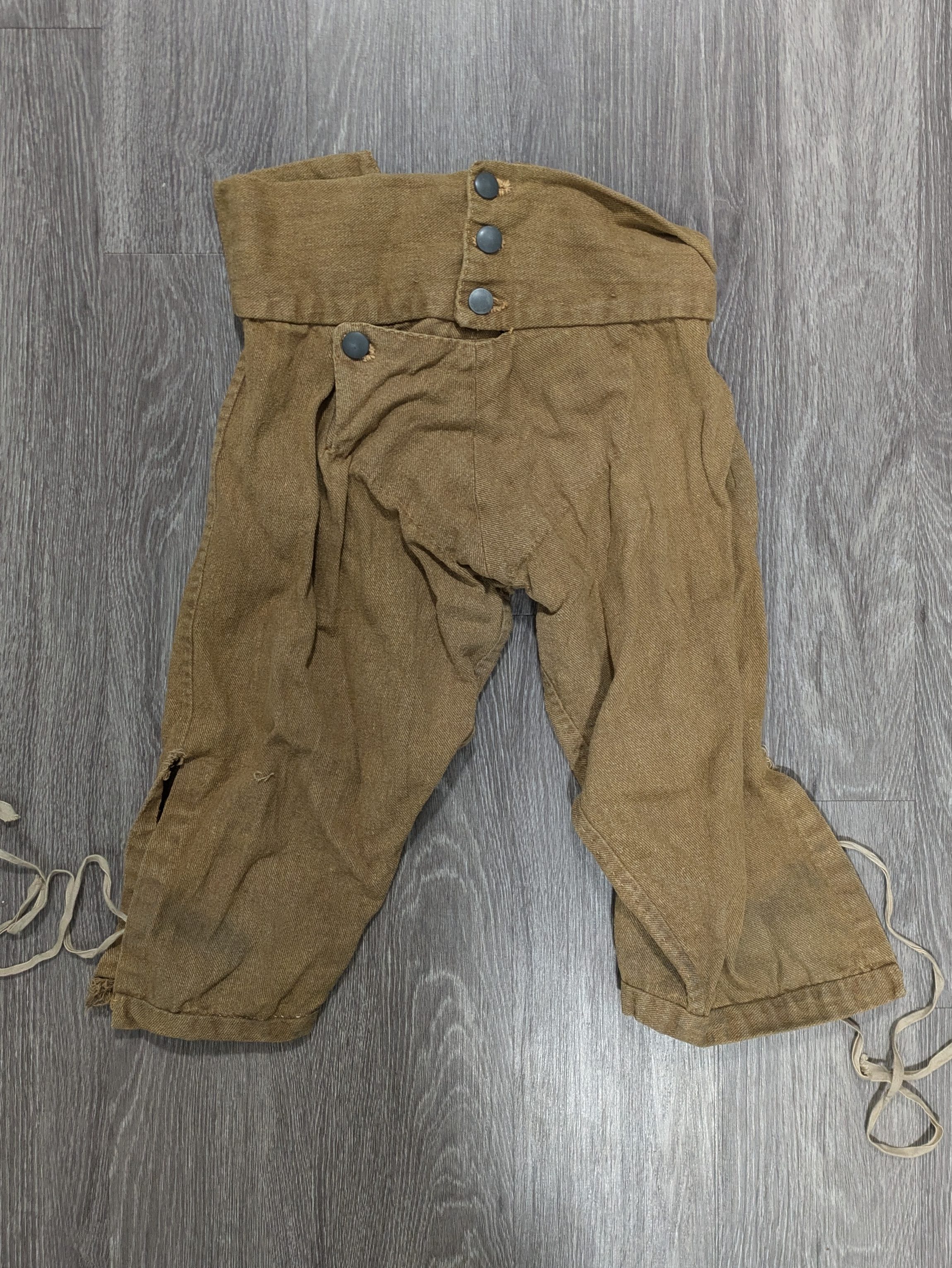
Germanic-styled breeches, which are similar to the standard 18th-century English style, with the exception of:
- The front flap opens only from the right side.
- The front flap has (3) brass buttons (two center and one on the right side). Note: the buttons in the example image are incorrect.
Breeches have linen tape tie-gathers at the knee. Green wool for winter wear, and tan (“straw” colored) or off-white linen for summer.
Sources:
- Blue Box Sutlery Custom Order
- Made by the unit.
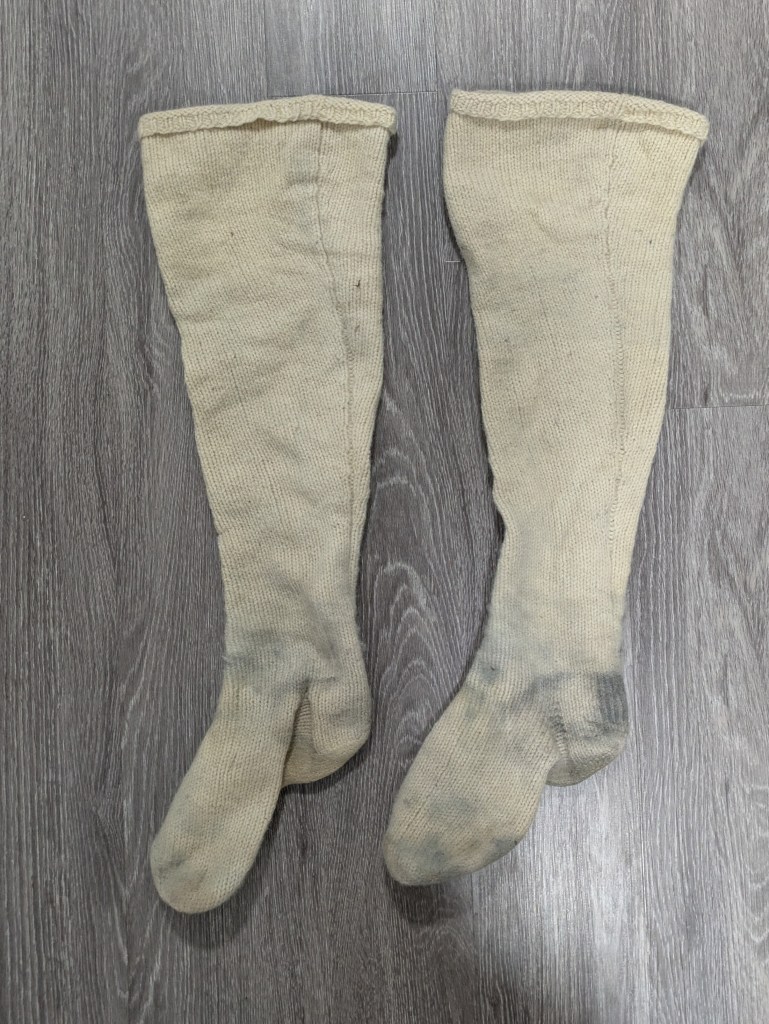
Stockings (Strumpf)
Any woven 18th-century common heel stockings in white or off-white.
Sources:
Gaiters (Stiefeletten)
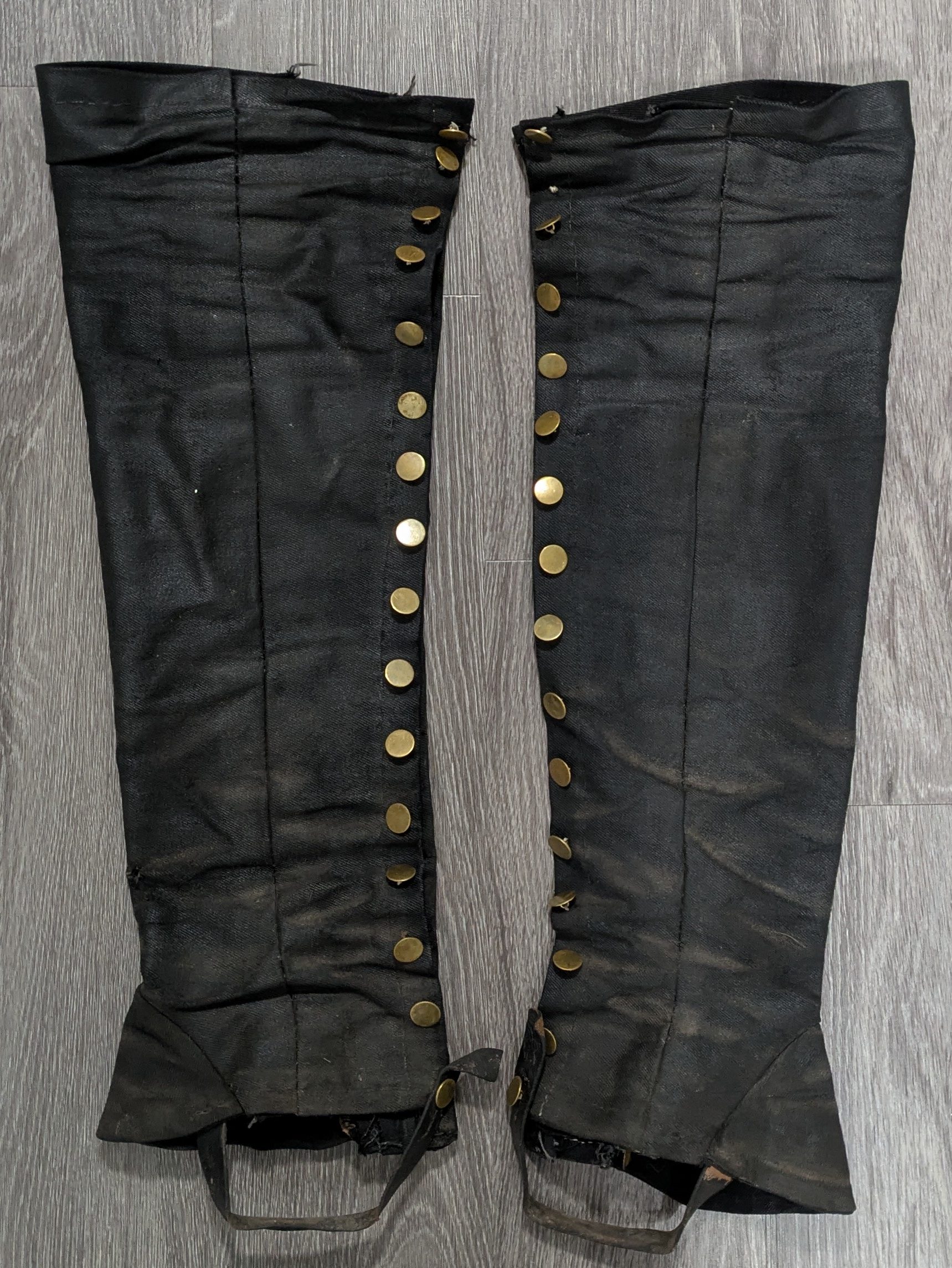
Black Gaiters of Germanic Pattern with Flat Brass Buttons. Our internal preference is black painted canvas. Gaiters are secured with black leather garters with gold buckles.
Sources:
- Gaiters are made by the unit.
- Samson Historical Garters
- Townsends Garters
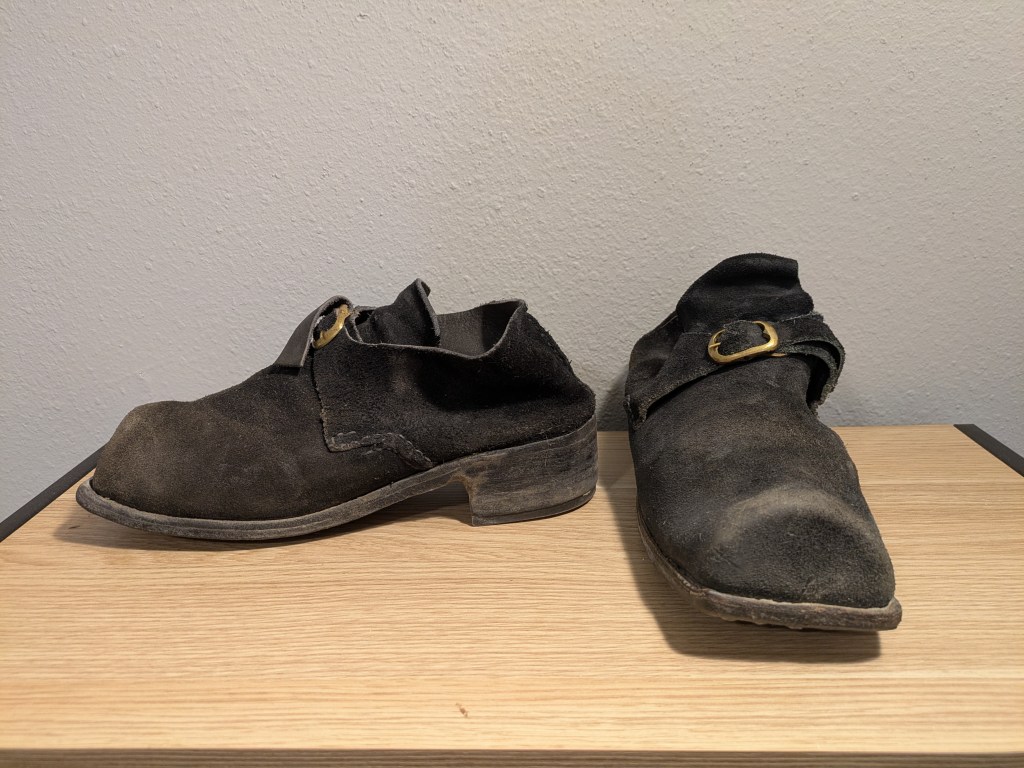
Shoes (Schuhe)
Square-toed Black buckled shoes of Hessian/Germanic pattern.
Any black leather 18th-century style shoe is acceptable.
Sources:
- Shoes 17-18th Century (Military)
- Shoes of the Prussian infantry
- Indian Made Etsy Listing (Your experience may vary)