
No item issued to the Jäger ran short as often as their shirts.
The December 1780 estimates provided each recruit with “1 flächsenes Hemd” (a linen shirt),1 and the 1781 equipment shipment sent two per man.2 In 1779, the entire A-B Jäger Corps received 517 linen shirts, almost three per man, and 400 ells of unbleached linen for repairs.3



No matter how many shirts the Jäger were provided, it was never enough. In December 1778, the corps commander, von Waldenfels, wrote to Colonel Voit asking for “ein ergiebiges Quantum Hemder”, a plentiful quantity of shirts, for his whole corps, “weil mein Vorrath nunmehro ganz zu Ende ist”, because his stock was entirely used up.4 In December 1780, Voit reported the corps’ “großen Mangel an Hemdern”, a great want of shirts, and lent it 250 from his own regiment’s stock.5 In spring 1781, he wrote again of the Jäger’s distress for want of shirts.6 In 1781–82, he bought 500 yards of linen in America for Jäger shirts,7 and in 1782 he reported that shirts and shoes in the Jäger Corps were “völlig zu Ende”, completely used up.8
Primary sources note that the shirt was made of linen but do not specify the cut or whether it was white, checked, or unbleached. A loss list from the 1781 campaign from a company of the Hessian Jäger appears to count upper shirts (likely a Vorhemd, or dickey) and under shirts as two separate articles;9 however, no Anspach paper makes that distinction.
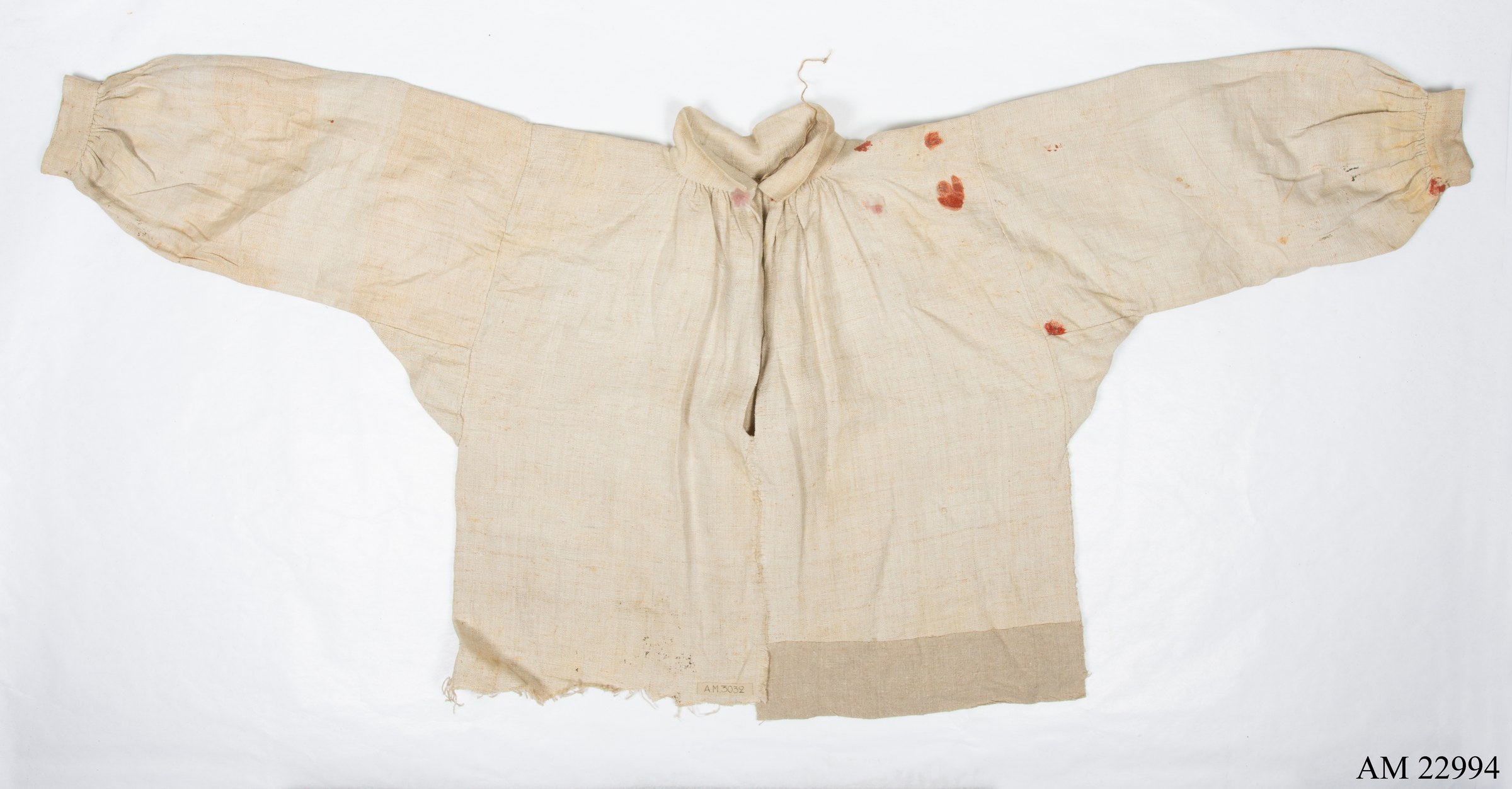
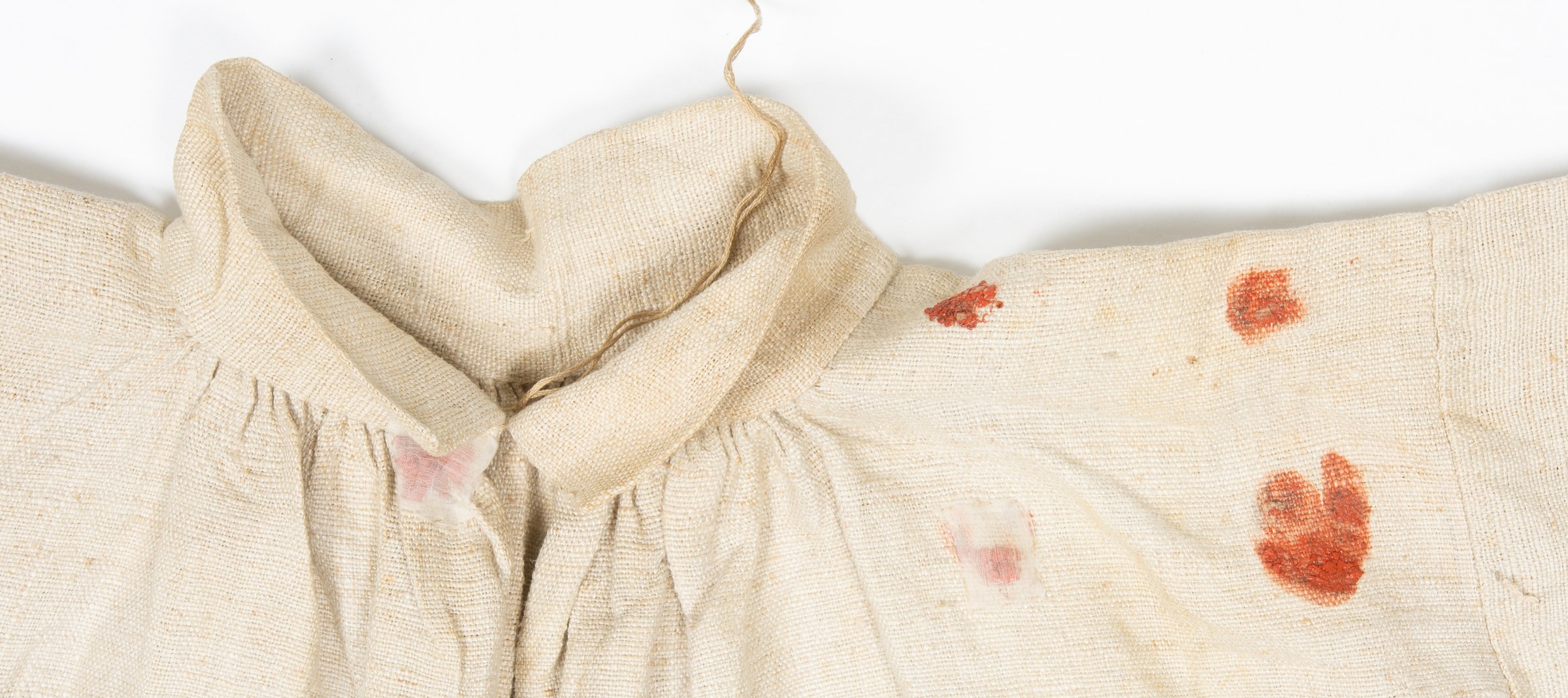
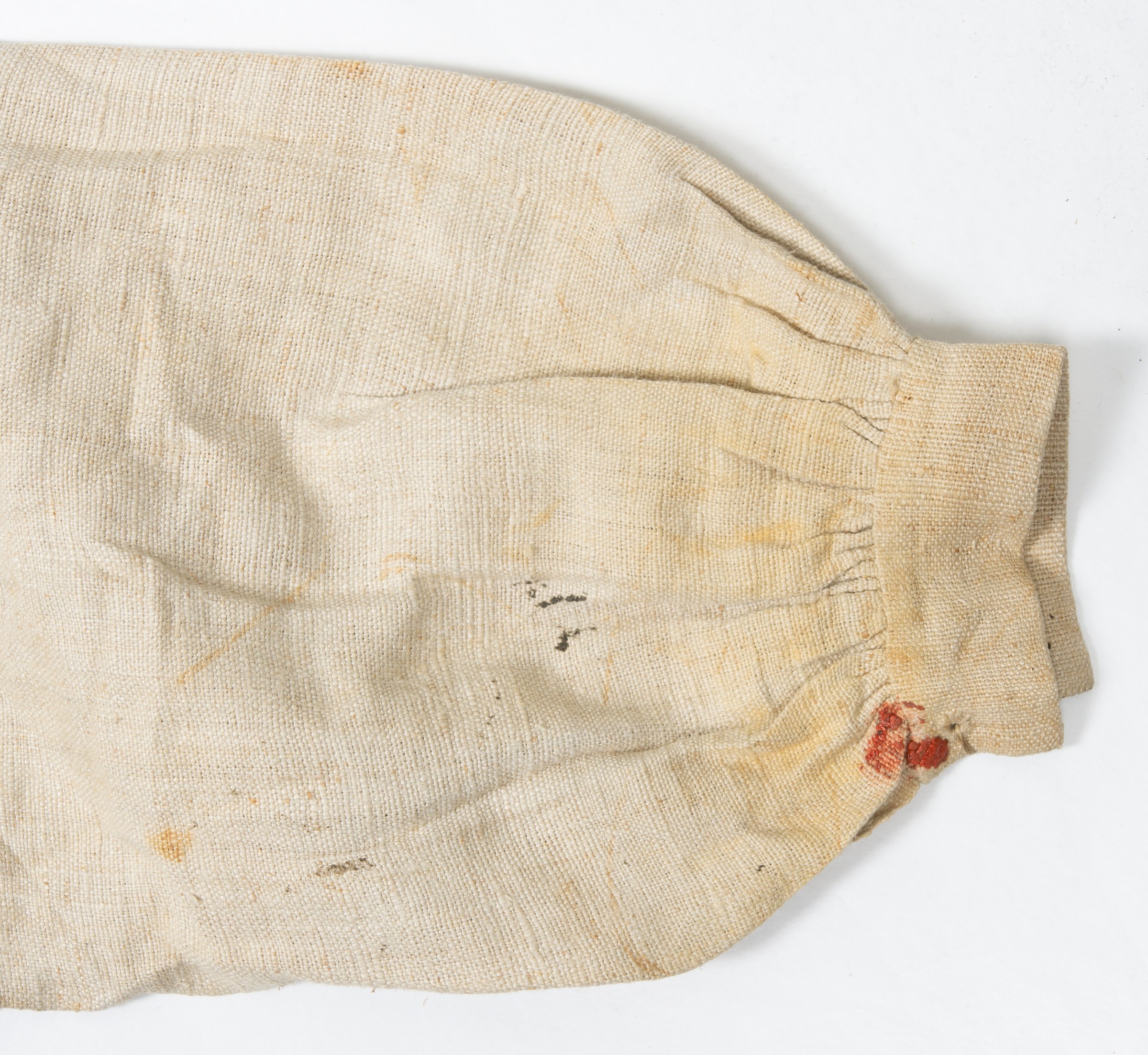
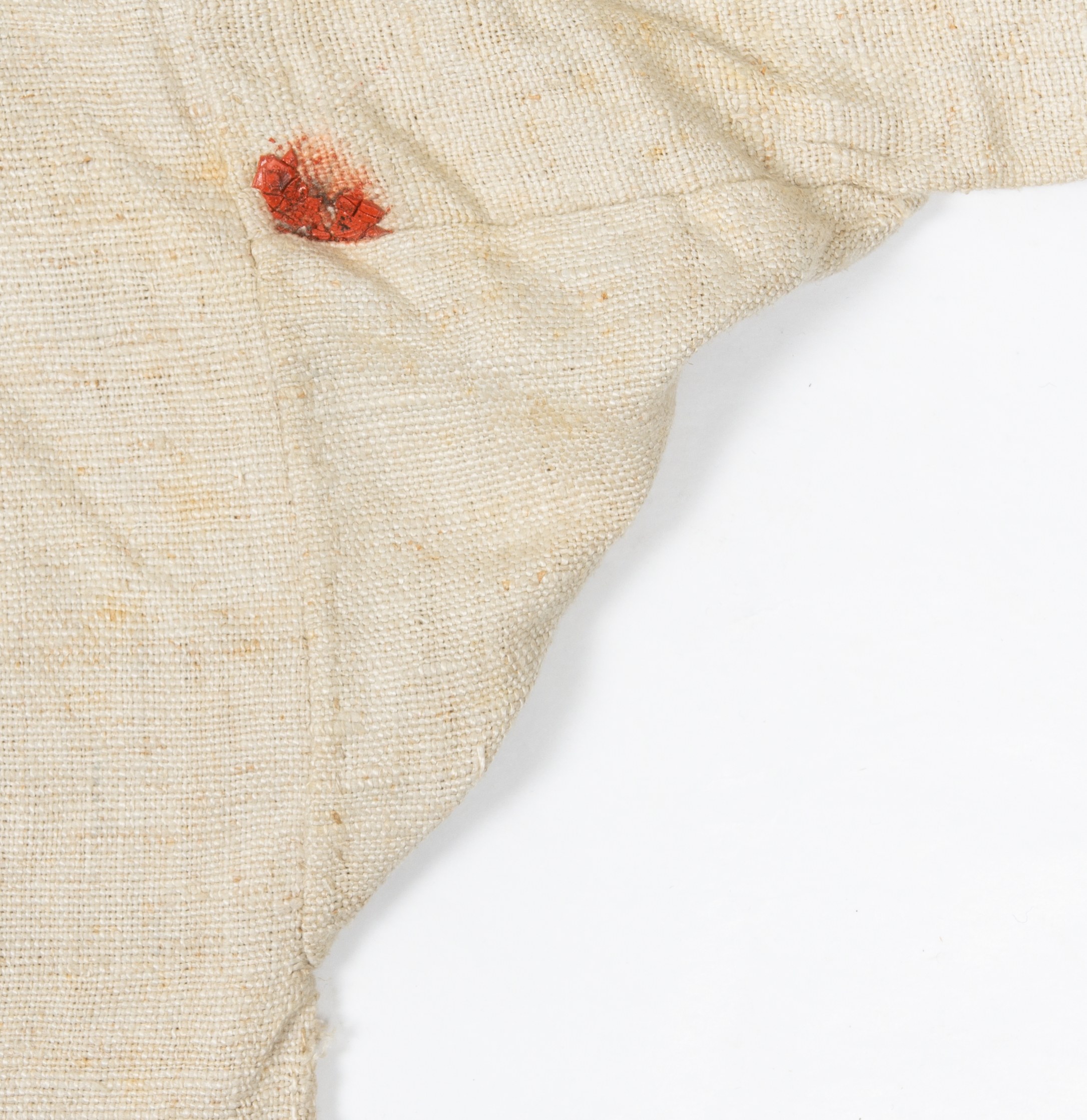
No Anspach-Bayreuth or other German soldier’s shirt from the period is known to have survived. The nearest documented army shirt is the Swedish infantry pattern shirt m/1757 in the Armémuseum (Swedish Army Museum), Stockholm. It is a “modellexemplar”, the sealed sample shirt that contractors had to copy, marked with red wax seals.
Object: Skjorta m/1757, shirt for the rank and file of the Södermanland Regiment, the pattern for the Swedish infantry.
Holder: Armémuseum, Stockholm. Inventory AM.022994 (older numbers G 319 and 3032).
Date: made 1757; the pattern was in use 1757–1814. In the museum since 1878.
Material: white linen or hemp, plain weave.
Catalogue entry with photographs: digitaltmuseum.se/011024381885/skjorta-m-1757
- Estimate of 28 December 1780, line h). New York Public Library, Bancroft Collection, Hessian MSS 47 (Anspach Papers), scan pg. 548 ↩︎
- Supply shipment of 1781. New York Public Library, Bancroft Collection, Hessian MSS 47 (Anspach Papers), scan pg. 552, 556 ↩︎
- Supply shipment of 1779 (extract of 20 February 1779). New York Public Library, Bancroft Collection, Hessian MSS 47 (Anspach Papers), scan pg. 469 ↩︎
- Waldenfels to Col. Voit, December 1778. Bayerisches Hauptstaatsarchiv, Kriegsarchiv, HS 1053 (Colonel Voit’s papers), frame 151L ↩︎
- Voit, December 1780. Bayerisches Hauptstaatsarchiv, Kriegsarchiv, HS 1053 (Colonel Voit’s papers), frames 300R–301L ↩︎
- Voit, spring 1781. Bayerisches Hauptstaatsarchiv, Kriegsarchiv, HS 1053 (Colonel Voit’s papers), frame 345L ↩︎
- Voit’s accounts, 1781–82: “500 Yards Leinwand zu Hembdern”. Bayerisches Hauptstaatsarchiv, Kriegsarchiv, HS 1053 (Colonel Voit’s papers), frame 575R ↩︎
- Voit, 1782. Bayerisches Hauptstaatsarchiv, Kriegsarchiv, HS 1053 (Colonel Voit’s papers), frame 422L ↩︎
- List of the arms and clothing lost in 1781 by Captain C. von Donop’s company of the Hessian Feldjäger Corps. Hessisches Staatsarchiv Marburg, 4 h Nr. 3784 ↩︎

